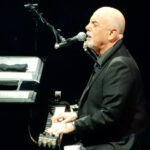








Billy Joel is objecting to Billy and Me, an unauthorized biopic that Pitchfork reports he does not want audiences to see. The project has been characterized as misguided on legal and professional grounds, and it will reportedly move forward without featuring any of his music.
That absence is the defining detail of the current dispute. A film centered on a musician’s life typically depends, at least in part, on the emotional force of the songs associated with that artist. In this case, the reported lack of Joel’s music makes Billy and Me an unusual proposition before audiences have even seen a frame.
The issue is not simply whether a biopic can exist without the cooperation of its subject. It is whether a film about a musician can meaningfully capture the public imagination without access to the music that shaped that musician’s identity in the first place. Joel’s objection puts that question at the center of the conversation around the project.
According to the report, the film is not being presented with Joel’s blessing. That matters because music biopics often carry an implied sense of authority, even when they take dramatic liberties or compress complicated lives into a filmable arc. Without the artist’s involvement, and without the artist’s songs, Billy and Me arrives with a built-in tension between subject and storyteller.
Joel’s position also draws attention to how audiences approach projects like this. A biopic can promise insight, nostalgia, drama, or rediscovery. But when the subject is publicly distancing himself from the production, viewers are prompted to think less about celebration and more about consent, control, and representation.
For a figure whose public image is closely tied to his body of work, the reported decision to proceed without his music is especially striking. Songs are not background decoration in a musician’s story. They are often the structure through which fans understand eras, relationships, ambition, conflict, and change. Removing that element does not make a biopic impossible, but it does change the nature of what the film can offer.
The title Billy and Me suggests a personal angle, but the available information does not explain how the film plans to frame its story. That lack of detail leaves the controversy to define the project for now. Rather than generating attention around casting, production, or a release plan, the conversation is being shaped by Joel’s objection and by the report that his music will not be included.
In the current landscape, where artist stories are frequently revisited for screen audiences, authorization has become part of the way such projects are received. An approved film may still face scrutiny, but it can lean on participation, access, and music rights as signs of legitimacy. An unauthorized project has a steeper climb, particularly when the artist at its center is actively signaling discomfort with it.
That does not answer what Billy and Me will ultimately be as a film. It does, however, clarify the terms under which it is entering public conversation. The project is not being introduced as a straightforward tribute or a sanctioned portrait. It is being discussed as a contested work that reportedly lacks the very music most viewers would expect to hear.
For now, the headline is less about a forthcoming depiction of Billy Joel than about Billy Joel’s rejection of that depiction. Until more is known, the most consequential fact remains the simplest one: the artist does not want audiences to see Billy and Me, and the film reportedly will not have his songs to speak for it.